How to Start a Junk Removal Business in 2026
Share
How to Start a Junk Removal Business in 2026 (Step-by-Step Guide for Beginners)
Starting a junk removal business in 2026 is one of the most practical ways to build a profitable local service company with relatively low startup costs and fast cash flow. Unlike many traditional businesses that require years of experience or expensive education, junk removal is simple to understand, easy to launch, and always in demand. Homeowners, landlords, real estate agents, construction companies, and even local businesses constantly need clutter, debris, and unwanted items removed quickly.
If you’ve been looking for a business model that can generate consistent income without needing a storefront or advanced technical skills, junk removal stands out as one of the strongest options. In this guide, you’ll learn exactly how to start a junk removal business in 2026, what it costs, how to get customers, and how to scale it into a real income-producing operation.
By the end, you’ll also understand why having a structured system—like a complete business starter kit—can significantly shorten your learning curve and help you avoid expensive beginner mistakes.
Why Junk Removal Is Still a Strong Business in 2026
The junk removal industry continues to expand because modern life produces more waste than ever before. People move frequently, renovate homes, downsize belongings, and replace furniture and appliances faster than in previous generations. At the same time, local regulations around disposal have become stricter, making it harder for individuals to handle junk on their own.
This creates a simple opportunity: convenience is now the product.
In 2026, demand is driven by several consistent sources:
- Residential moves and cleanouts
- Rental turnovers and evictions
- Home renovations and property flips
- Commercial warehouse and office cleanouts
- Storm damage and emergency cleanup
Unlike seasonal businesses, junk removal runs year-round. With the right setup, you can generate steady income every month.
How the Junk Removal Business Model Works
At its core, junk removal is straightforward. You get a customer request, show up with a truck or trailer, load unwanted items, and dispose of them properly. You charge based on volume, labor, or job complexity.
Most beginners underestimate how profitable this model can be. A single job can range from $150 to $800+ depending on load size, labor, and disposal fees. Once you have systems in place, it’s possible to complete multiple jobs per day.
The simplicity is the advantage—but execution is what determines income.
Step 1: Setting Up Your Business Properly
Before you take your first job, you need a legal and professional foundation.
Start by choosing a clear, searchable business name. Many operators use location-based names like “Dallas Junk Removal” or brandable names if they plan to expand beyond one city.
Next, register your business as an LLC to protect your personal assets. This is a simple step that adds credibility when dealing with commercial clients and property managers.
You’ll also want general liability insurance. This is not optional if you want to work with higher-paying clients. It protects you in case of accidental damage during a job.
This foundation separates real businesses from side gigs and builds trust from day one.
Step 2: Equipment and Startup Costs
One of the biggest advantages of junk removal is the low barrier to entry.
At minimum, you need a vehicle capable of hauling items—typically a pickup truck, cargo trailer, or box truck. You’ll also need:
- Gloves, straps, and safety gear
- Dollies for heavy lifting
- Basic hand tools for dismantling furniture
- Budget for dump fees and fuel
Startup costs vary widely. If you already own a vehicle, you can start with a few thousand dollars. If you’re purchasing a box truck setup, total investment may range from $10,000 to $30,000.
The key mistake beginners make is overspending on equipment before they have customers. Revenue comes first, upgrades come later.
Step 3: Pricing Your Junk Removal Services
Pricing is one of the most important parts of your business.
Most successful junk removal companies use volume-based pricing. This means customers are charged based on how much space their junk takes up in your truck.
A simple structure looks like this:
- Minimum pickup fee
- Quarter load
- Half load
- Full truck load
You can also adjust pricing based on labor difficulty, weight, or disposal requirements.
In 2026, speed matters. Customers expect fast quotes—often from photos sent over text or social media. The faster you respond with a clear price, the higher your close rate.
Step 4: How to Get Your First Customers
Marketing is where most beginners either grow quickly or fail completely.
The good news is you don’t need complicated advertising systems to start. You need visibility in your local area.
Your first customers typically come from:
- Google Business Profile optimization
- Facebook community groups
- Local Craigslist listings
- Door hangers and flyers
- Partnerships with realtors and landlords
Google is especially powerful. A properly optimized profile with photos, service descriptions, and early reviews can generate consistent inbound leads.
The key is consistency. Most beginners stop marketing too early before momentum builds.
Step 5: Building a Real Business System
Once jobs start coming in, the next step is organization.
At this stage, you shift from operator to business owner.
You need systems for:
- Tracking leads and customer inquiries
- Scheduling and routing jobs efficiently
- Standardizing pricing and quotes
- Managing dump runs and disposal costs
- Hiring help or subcontractors
Without systems, you remain stuck trading time for money. With systems, you can start scaling.
Step 6: Scaling and Increasing Profit
Once your business is stable, growth becomes the focus.
You can increase revenue by raising prices as your reputation improves. You can also expand into related services like demolition cleanup, estate cleanouts, and appliance removal.
Another major growth path is hiring crews and operating multiple trucks. One owner can manage several teams once systems are in place.
At this stage, junk removal shifts from a job into a scalable service business.
Common Mistakes That Kill Profitability
Many junk removal businesses fail for predictable reasons.
They underprice jobs and burn out quickly. They ignore marketing and rely only on referrals. They fail to track dump fees and expenses correctly. They also lack structure, which creates inconsistent income.
The difference between struggling operators and successful ones is not effort—it’s systems and execution.
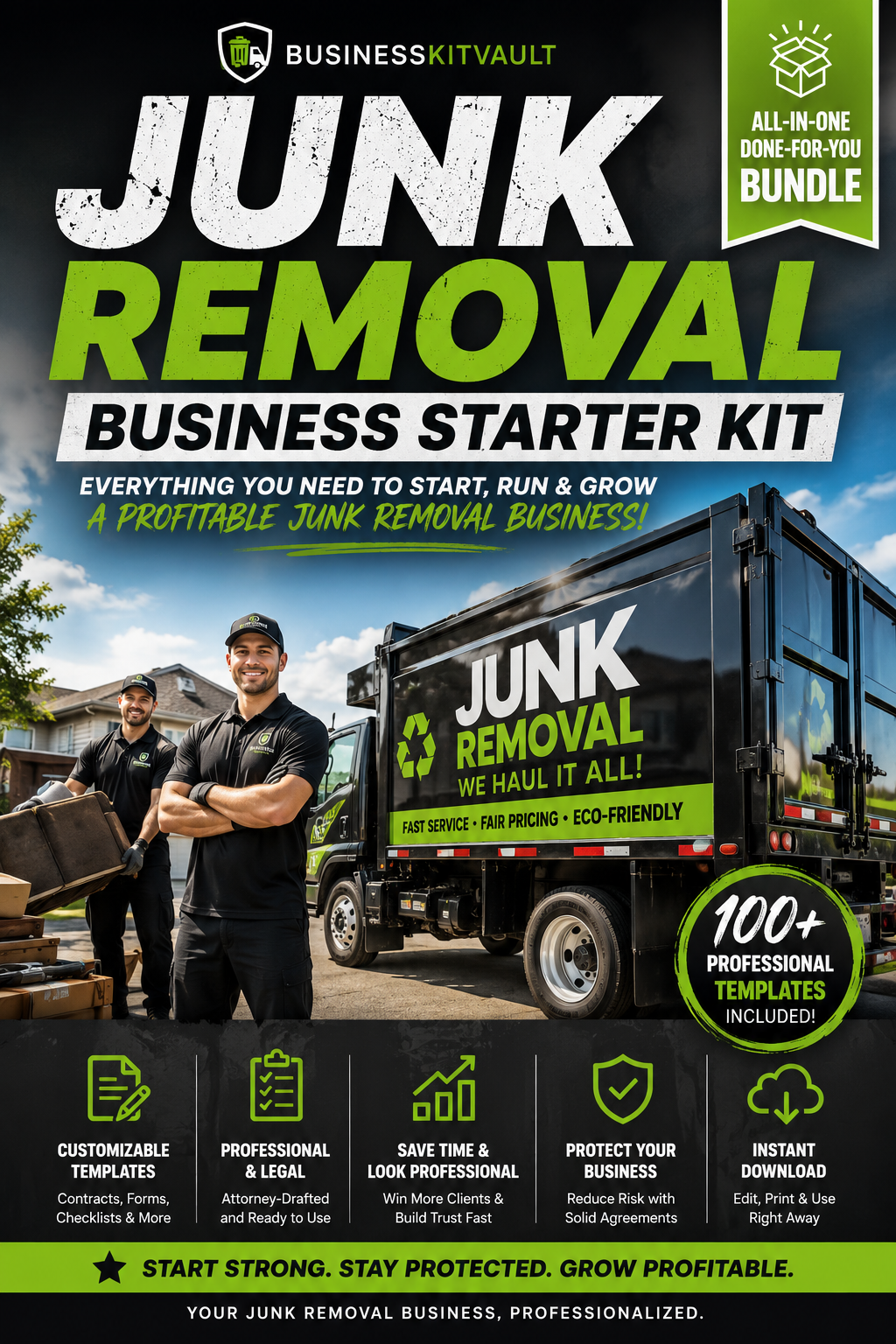
Why a Business Starter Kit Changes the Game
Starting from scratch means figuring out pricing, contracts, forms, marketing, and operations on your own. That process can take months and often leads to expensive trial and error.
A structured junk removal business starter kit removes that uncertainty.
Instead of guessing, you get ready-to-use templates, pricing frameworks, customer forms, quote sheets, operational documents, and marketing systems designed for real-world use.
This allows you to skip the confusion phase and focus immediately on getting customers and generating revenue.
In a competitive 2026 market, speed and structure are everything.
A starter kit doesn’t just save time—it accelerates your path to profitability.
Final Thoughts
Starting a junk removal business in 2026 remains one of the most accessible ways to build a real income-producing business with low startup costs and high demand.
The opportunity is simple, but success depends on execution—pricing correctly, marketing consistently, and operating with systems from day one.
If you approach it like a real business instead of a side hustle, junk removal can quickly turn into a strong cash-flowing operation.
And the fastest way to get there is not reinventing everything yourself—but starting with a proven system that shows you exactly what to do from day one.